Te reo Māori is not the issue. Our failure to plan for the future is.
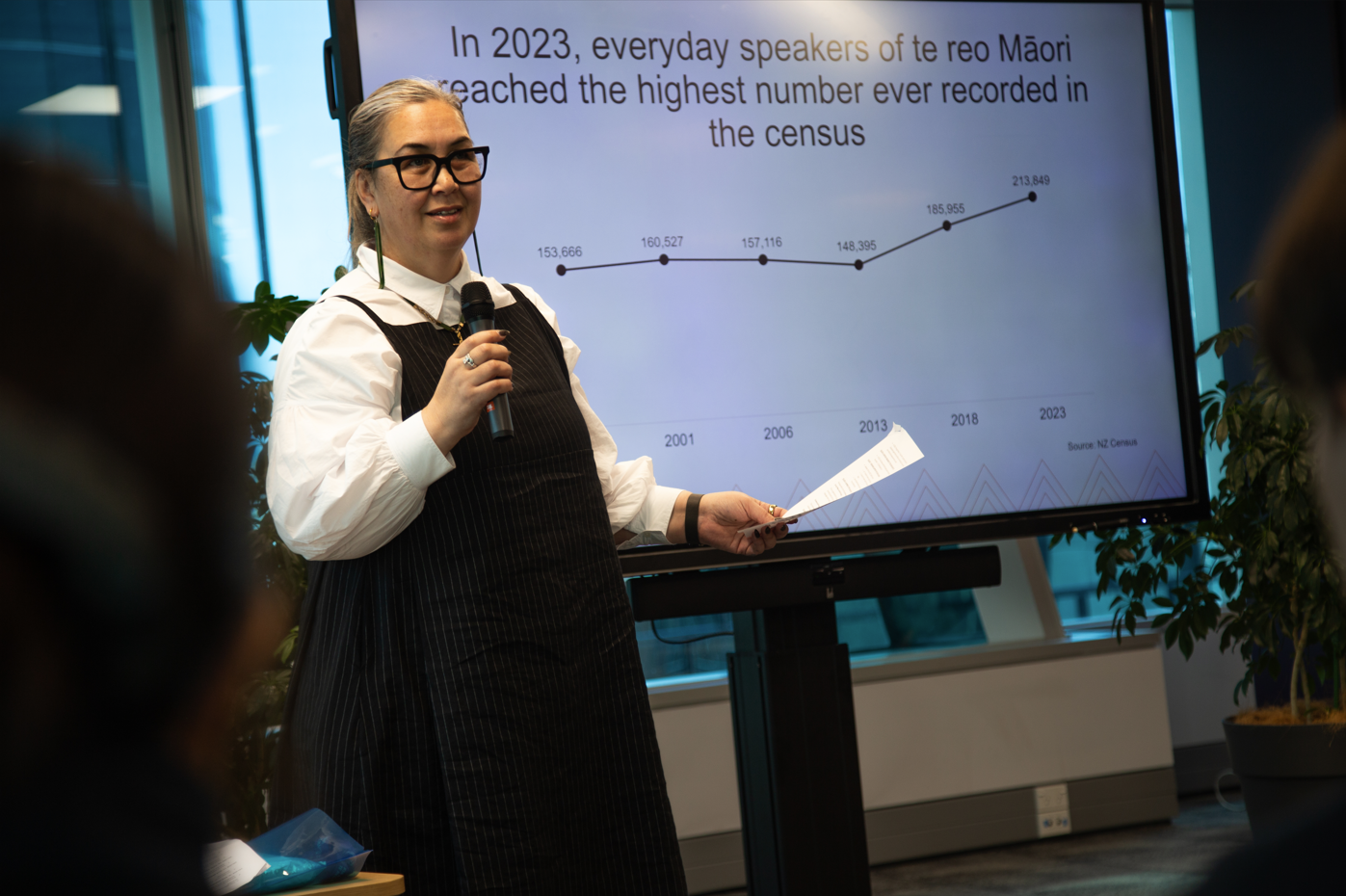
By Professor Rawinia Higgins
Māori Language Commissioner, Te Taura Whiri i te Reo Māori & Deputy Vice-Chancellor Māori & Kaitiakitanga – Te Herenga Waka Victoria University of Wellington
The Public Service Minister’s decision to update official branding guidelines to prioritise English over te reo Māori has been defended on the basis that most New Zealanders speak English.
This rationale is intellectually weak, culturally insecure, and fundamentally inconsistent with the Government’s own stated commitments to te reo Māori revitalisation.
The fact that most people speak English is precisely why English does not require protection.
English dominates every major institution in this country: government, commerce, media, education and digital life. English speakers are not at risk of losing access to information because te reo Māori appears first on a logo or departmental heading. Non-Māori language speakers are entirely capable of reading through a Māori name to get to its English translation. We do this constantly in multilingual societies around the world. It is neither confusing nor exclusionary. It is normal.
What is not normal is the persistent political anxiety that erupts in this country whenever te reo Māori occupies visible public space.
This latest move sits awkwardly beside the Maihi Karauna, the Government’s own strategy for Māori language revitalisation. The strategy commits us to increasing the visibility, status and everyday use of te reo Māori across society. Symbolism matters in language revitalisation. Visibility matters. Normalisation matters. Governments know this. That is why branding exists in the first place.
You cannot simultaneously claim to support Māori language revitalisation while actively reducing the visibility of the language in state identity.
And while ministers may frame this as merely implementing a coalition agreement, timing matters in politics. The implementation lands as election season begins to stir, placing te reo Māori into the cycle of political debate and the battleground for wider ideological anxieties.
Te reo Māori is once again being used as a political football.
This strategy is not new. It echoes much older colonial patterns that sought to subvert te reo Māori as a means to undermine Māori people. The underlying message from the government remains the same: Māori language is acceptable, so long as it stays secondary, contained, and politically convenient.
What makes this especially shortsighted is the demographic reality this country is moving toward.
Research from Distinguished Professor Paul Spoonley and others has consistently pointed to the growing significance of the Māori population within the future workforce of Aotearoa. Māori are a young population in an ageing nation. As birth rates decline and labour shortages intensify, Māori will become increasingly central to New Zealand’s economic sustainability.
Yet instead of investing political energy into eliminating systemic inequities that continue to constrain Māori potential (such as inequities in education, health, housing, income and employment) we find ourselves debating the order of languages on government branding.
Supporting te reo Māori is not a distraction from the future economy. It is part of preparing for it.
Language revitalisation is not simply cultural ornamentation. It is part of nation-building and creating social cohesion. It is intergenerational confidence. It is about whether Aotearoa New Zealand sees Māori identity as foundational to the country’s future or merely tolerable when politically expedient.
The visibility of te reo Māori in public life tells Māori children whether their language belongs in the future of this country. It tells the world whether New Zealand is confident enough to embrace its own uniqueness rather than retreat into colonial reflexes whenever political pressure rises.
Supporting te reo Māori is not about putting English speakers second. It is about putting our future first.