-
He kupu mō mātou
About us
He kupu mō mātou
About us
-
Ngā mahi whakarauora
History & revitalisation
Ngā mahi whakarauora
History & revitalisation
-
Te Rēhita Kaiwhakamāori
Translators and Interpreters Register
Te Rēhita Kaiwhakamāori
Translators and Interpreters Register
-
Ngā kaupapa nui o te wā
News & events
Ngā kaupapa nui o te wā
News & events
-
Te whakamahere reo
Language planning
Te whakamahere reo
Language planning
-
Ngā rangahau me ngā pūrongo
Research & reports
Ngā rangahau me ngā pūrongo
Research & reports

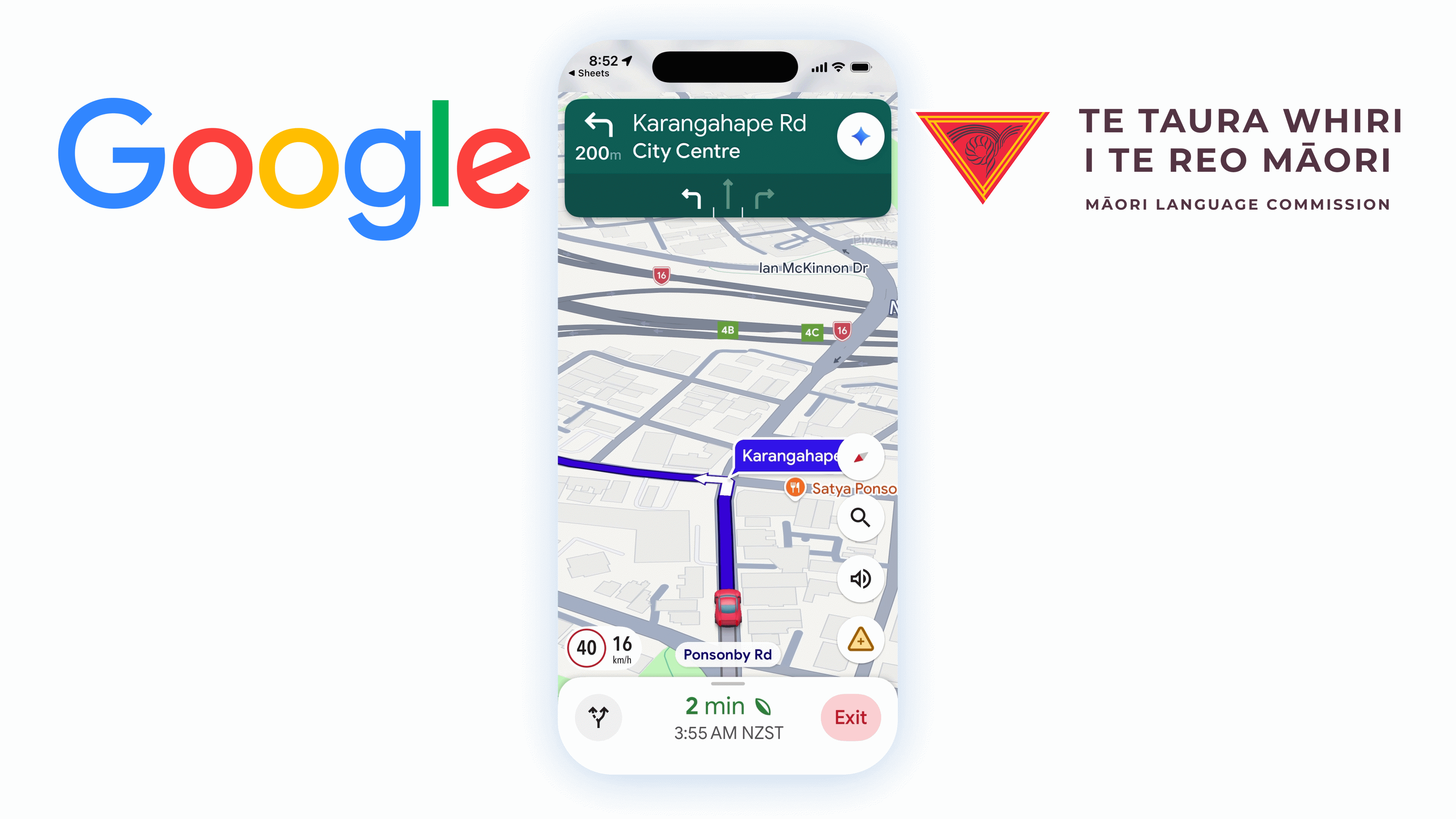
Te Taura Whiri i te Reo Māori and Google are working together to strengthen the presence of te reo Māori in the digital world. Through a new Google Maps voice, place names across Aotearoa can now be heard as they are meant to sound — supporting correct pronunciation and deeper connection to the stories behind them.
The technology behind the voice is a new AI-powered Text-to-Speech model that speaks English with a Kiwi accent and is designed to correctly pronounce towns and cities with te reo Māori names.
As with any new technology, the tool may not be 100 percent accurate from the start. So, if you hear place names that aren’t being pronounced correctly, please let us know using the form below.
We are continuing to work with the team at Google to ensure this technology continues to improve. A partnership that reflects a shared commitment to ensuring te reo Māori is visible, valued and spoken as an everyday language.
FAQs
Who was consulted in the development of this text to speech?
Google and Te Taura Whiri have worked in close collaboration for many years. The pronunciation approach has been guided by Te Taura Whiri and supported by publicly available data from the New Zealand Geographic Board.
What other Google products will the voice be available in?
Currently the voice is only available in Google Maps.
What data was used to train the voice?
The New Zealand AI voice is trained using new recordings made of a Kiwi voice actor. The voice actor was chosen because of their Kiwi accent and excellent te reo Māori pronunciation. Te Taura Whiri and Google worked together to select the voice and validate the quality of the recordings.
How was Māori language data collected and used?
Google supported the collection of data by providing funding and infrastructure and holds a licence to use the pronunciation data. Te Taura Whiri is responsible for the kaitiakitanga of this data and will lead how it is shared and used with relevant stakeholders.
See also - Google’s new approach to recognising data governance:
- A partnership with Howard University to improve speech technology for Black voices
- A partnership with The University of Western Australia to improve speech technology for Aboriginal and Torres Strait Islander people's voices
Who controls the data long-term?
Te Taura Whiri is the kaitiaki of the Māori language data used in this model. Google has a licence to use this data for the Text-to-Speech model.
Over time, the intention is to establish a group of interested parties as long-term kaitiaki. The goal is to ensure Māori academics, researchers and communities, who are looking to improve speech or similar technology, would have the ability to access this data, share the benefit and contribute to the evolution of this kaupapa.
What is the reporting process for words that aren’t pronounced correctly?
If you notice a te reo Māori word that is not being pronounced correctly, please fill in the form at the bottom of this page.
How does the model handle te reo Māori dialectal differences?
This update is not a te reo Māori language version of Google Maps. It is an English Text-to-Speech model designed to pronounce te reo Māori place names using standard pronunciation. Dialect variations are not part of this release.
Will the voice improve over time?
Yes. As with all AI technology, there is scope for the voice to improve over time as more feedback is received.
How does the model handle words that have meaning in both English and Māori — e.g “Mate”?
This model is designed for English-language use in Google Maps and has been trained to correctly pronounce te reo Māori place names. In cases where a word exists in both English and Māori, the default pronunciation will follow English.
Click here to download terms that have been investigated or are currently under investigation.
Have you found an issue with our maps? Please report it using the form below.